

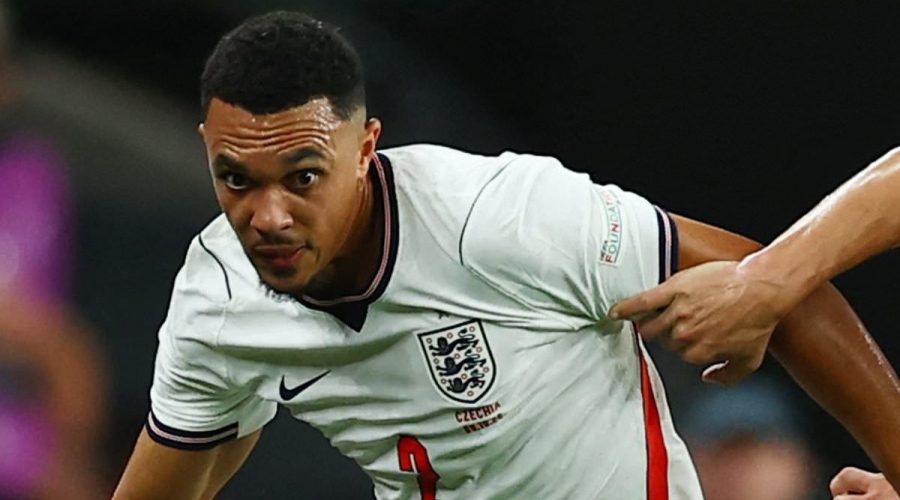
Thomas Alexander‑Arnold’s “alexander‑arnold role” took centre‑stage in Thomas Tuchel’s latest England camp, as the Liverpool right‑back spent most of the first half against the Czech Republic operating in dangerous zones rather than retreating into a traditional deep‑lying position. Tuchel believes the shift is vital for a more vertical, width‑adding shape that could redefine how England attacks at the upcoming European Championship.
Tuchel told reporters that Alexander‑Arnold must “buy into the new ideas” the England set‑up demands. The instruction moves the player away from the classic “quarter‑back” habit of circulating short passes from a deep area and pushes him higher up the pitch. In practice, this means the full‑back is expected to overlap, create width on the right flank and deliver the kind of long‑range crosses that have become his trademark, while also staying involved in the final third. During the friendly, Tuchel observed the Liverpool defender making runs that stretched the Czech defence, a pattern that, if repeated, could open space for attackers further inside. The coach noted that this overlapping movement is designed to free Bukayo Saka, allowing the winger to cut inside without being forced to hug the touchline. By having a “buzzing” presence on the edge, Alexander‑Arnold provides a dual threat: a crossing outlet and an extra passing option that can break lines.
Statistical analysis of the first half show the tactical change. Alexander‑Arnold recorded 47 touches, a figure exceeded only by Marc Guehi. Crucially, the majority of those touches came in the opponent’s half, with just 11 occurring inside England’s own half. This distribution highlights how far up the pitch the right‑back was positioned, effectively operating as an auxiliary attacker. Tuchel praised the performance, saying it “shows his true capacity” and hinted that the player could soon add more caps to his current tally of 36. The numbers also reflected England’s overall dominance of possession, as the team kept the ball in the final third and produced several incisive passes that threatened the Czech back line. While the raw figures are simple, they illustrate a broader shift away from a conservative defensive posture toward a more proactive, forward‑driven approach.
The match also featured Harry Kane reaching a personal milestone. Two goals against the Czech Republic lifted his England tally to 91, nudging him past former Asian greats Mokhtar Dahari and Sunil Chhetri. At 92 he will be within reach of Robert Lewandowski’s record, and continued scoring could see him challenge Ali Daei’s 108‑goal mark. Kane’s contribution went beyond finishing; he dropped deep to link play, a movement that complements the more adventurous full‑back work Tuchel is encouraging. By pulling defenders out of position and creating space for the overlapping right‑back, Kane’s deeper positioning adds another layer to England’s evolving attacking template. His dual role as goal‑scorer and play‑maker exemplifies the kind of multifunctional forward the new system favours.
Club fatigue versus national ambition
Manchester City’s influence on the squad was evident, with several of its players featuring heavily in the camp. Enzo Maresca expressed relief when Marc Guehi and Elliot Anderson were withdrawn after the hour mark, noting that both had shouldered almost every minute of the England program. Despite concerns about a tight turnaround between matches, Tuchel insisted that both City men remain in the starting line‑up to secure a quarter‑final berth. Harry Kane, the only other player to start all four recent fixtures, also avoided injury, giving the coach confidence that club fatigue will not derail the national plan. The balance between club commitments and international preparation remains a delicate one, especially as the Premier League calendar grows increasingly congested. England’s coaching staff continues to monitor workloads closely, aiming to preserve key players for the crucial stages of the tournament.
Goalkeepers in the spotlight
The goalkeeper position received its own share of attention. Jordan Pickford, after a misplaced pass early in the game, later praised the value of “playing a pass through the lines, or a longer pass.” His distribution rate hovered around 80 percent, with a number of attempts aimed at breaking the opposition’s lines and initiating attacks. The upcoming Euros could see a direct contest between Pickford and rising talent James Trafford for the No 1 spot. Both keepers have shown a willingness to act as the first point of attack, a trend that aligns with Tuchel’s possession‑driven philosophy. Whichever keeper secures the role will need to combine shot‑stopping with the confidence to participate in the build‑up, a skill set increasingly prized in modern international football.
Youth outreach at Wembley
Beyond the senior squad, England’s development programme continued its outreach at Wembley. Former international Ashley Young visited the stadium to speak with Under‑15 players, an event organised by Michael Johnson, head of talent identification for the U‑14 to U‑17 age groups. Young shared anecdotes from his own career, offering guidance on the professional pathway and reinforcing the FA’s commitment to nurturing future talent. Such interactions aim to inspire the next generation and ensure a pipeline of technically proficient players who can adapt to the evolving tactical demands set by the senior team.
Looking ahead
Tuchel’s emphasis on a more vertical, width‑adding approach signals a shift in England’s tactical identity as the European Championship approaches in 18 months. The “alexander‑arnold role” will likely become a template for other full‑backs, while the interplay with Saka and the creative freedom given to midfielders could define England’s attacking options. The next step for the coach is to refine these concepts in the remaining friendlies, test the system against varied opposition, and ensure the squad enters the Euros with a cohesive, modern game plan. As the calendar tightens, the balance between club duties, player fitness and tactical experimentation will shape England’s chances of translating this new style into tournament success.



Comments
No comments yet. Be the first to share your thoughts!