





Prophet Odumeje Stirs Controversy With Bold Statement on Nigerian Unity: “If One Nigeria Is Not Working, Let the People Separate”
Prophet Odumeje has sparked fierce national debate after declaring that Nigeria should consider separation if the country is not working for its people. Read the full story and public reactions.

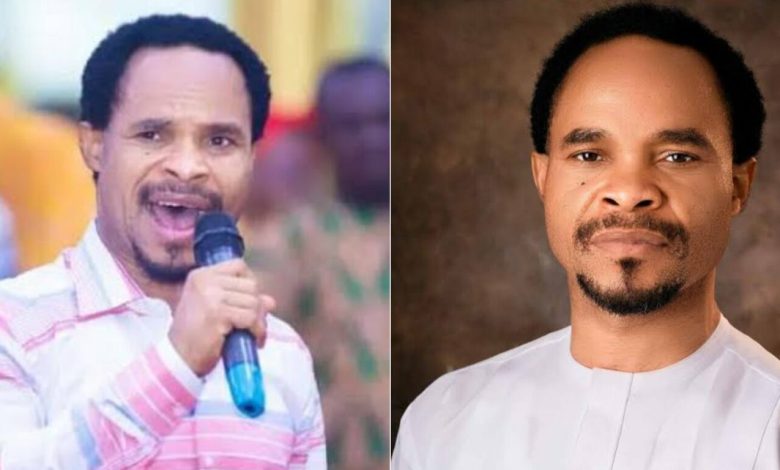
Flamboyant Anambra-based prophet and self-styled spiritual heavyweight Chukwuemeka Ohanaemere, popularly known as Odumeje or the Indaboski Bahose, has waded fearlessly into one of Nigeria’s most sensitive and historically charged conversations — the question of national unity — declaring in a statement that has since ignited fierce debate that if the Nigerian project is failing its people, separation deserves serious consideration as an alternative.
“If one Nigeria is not working, let people separate,” the controversial clergyman stated, in the kind of direct, unhedged language that has made him one of the most talked-about and polarising figures in Nigerian public life. The statement, which emerged from a video that circulated widely across social media platforms, landed with the force of a thunderclap in a country where the subject of separatism, ethnic autonomy, and the restructuring of the federation remains as explosive today as it has ever been.
For Odumeje, the comment is a significant departure from the kind of spiritual and entertainment content that first brought him to national and international attention. The prophet, whose theatrical church services and viral videos earned him a devoted following and a level of pop culture fame unusual even by the standards of Nigeria’s colourful Pentecostal landscape, has in recent years increasingly ventured into social and political commentary — and his fanbase, which cuts across regions and demographics, means that when he speaks, the audience is substantial.

The reaction online was immediate and deeply divided, mapping almost perfectly onto the fault lines that have defined this conversation in Nigeria for decades. In the southeastern and south-south regions, where agitation for the realisation of Biafra has remained a live and at times violently contested political current, many received Odumeje’s statement as a validation of long-held frustrations. Supporters argued that a man of his profile saying openly what millions feel privately was a form of courage that the political class consistently fails to demonstrate. “He said what plenty of us are thinking,” one commenter wrote, drawing thousands of engagements.
From the north and among those who identify strongly with the cause of Nigerian unity, the response was one of alarm and condemnation. Critics argued that a religious leader with Odumeje’s reach had a responsibility to use his platform to promote peace and cohesion rather than fan the embers of separatist sentiment in a country that has already lived through the catastrophic trauma of civil war. The reference to the Nigeria-Biafra war of 1967 to 1970, which claimed between one and three million lives, surfaced repeatedly in the debate as a reminder of what the ultimate cost of national fracture looks like in human terms.
Constitutional lawyers and political analysts who commented on the story noted that the conversation Odumeje has stepped into is one that Nigeria’s political establishment has consistently refused to have with genuine honesty. Questions about restructuring, resource control, the fairness of the federal character principle, marginalisation of ethnic minorities, and the equitable distribution of national wealth have been raised, suppressed, and raised again across successive administrations without resolution. It is precisely that unresolved tension, many argued, that gives statements like Odumeje’s their combustible energy — he is not creating the frustration, he is merely naming it.
The concept of separation itself means different things to different people in this conversation. For some, it means full political independence for ethnic or regional groupings. For others, it means a deeply restructured federation in which states or regions exercise significantly greater autonomy over their own resources and governance. For others still, it is a rhetorical position — a way of expressing the depths of disillusionment with how the Nigerian state currently functions rather than a literal policy proposal. Odumeje’s statement, delivered without elaboration, is broad enough to accommodate all of these interpretations simultaneously, which may be precisely why it has generated such a wide and volatile response.
What is beyond dispute is that the conversation about Nigeria’s structural future is no longer confined to academic journals, activist circles, or the manifestos of separatist movements. It is alive in markets, in churches, in barbershops, and now, once again, on the social media timelines of millions — sparked this time not by a politician or an ethnic champion but by a prophet in a rhinestone suit who has never been afraid of saying the quiet part loud.
Whether Odumeje intended to ignite a national debate or simply expressed a personal view in a moment of candour, the effect is the same. Nigeria is, once again, talking about Nigeria — about what it is, what it was supposed to be, and whether what it is becoming is close enough to that vision to be worth holding together.
se video belo……
@kendoorji1 If you people cannot handle the country as one Nigeria, let’s separate — ODUMEJE #Odumeje #indaboski #lionhimself #fyp #kendo ♬ original sound – kendo