
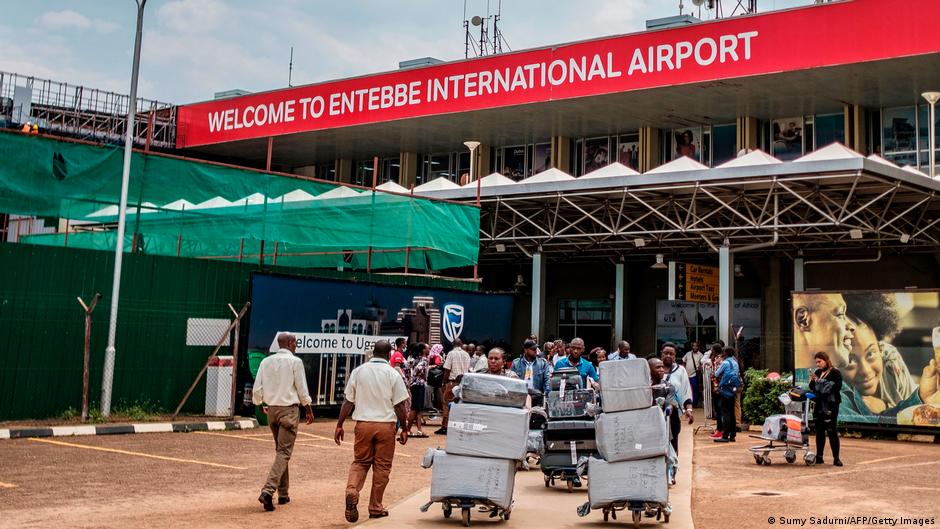
The first confirmed Ebola cases in Kenya and Nigeria have placed Uganda under renewed scrutiny, with health officials noting that both patients travelled through Entebbe International Airport on October 3. Uganda maintains it has no active infections, but the overlapping travel dates have sparked investigations into whether the airport served as a point of transmission. African health agencies, including the Africa Centres for Disease Control and Prevention (Africa CDC), are now reviewing passenger logs and contact lists to determine if the two individuals were present at the same time. The situation show the difficulty of tracing the virus across busy cross‑border routes in East Africa.
Nigeria’s health minister, Muhammad Ali Pate, announced on Thursday that a woman in Abuja had tested positive for Ebola after developing symptoms on October 7 and seeking care on October 11. The patient, a Swiss national of Ugandan origin married to a Swiss diplomat, was isolated and is reported to be stable. Officials have identified 44 contacts, ranging from health‑care workers to fellow travellers, and are intensifying contact‑tracing efforts. While the Nigerian ministry initially suggested the woman had passed through Uganda after a business trip to the Democratic Republic of Congo (DRC), Switzerland’s foreign affairs department later denied any travel to the DRC, insisting the couple never visited the conflict‑ridden country. The World Health Organization and Africa CDC have yet to receive independent confirmation of the woman’s movements.
In Kenya, the country’s first Ebola patient, who died in Nairobi on October 5, also transited Entebbe Airport after travelling from the DRC. Kenyan health authorities have reported additional infections linked to the original case and are searching for a Ugandan national identified as a close contact of the deceased patient. Director‑General of Health Patrick Amoth told the Daily Nation that the man is known by name and passport number, but his whereabouts remain unknown because he uses a South Sudanese telephone number, complicating efforts to locate him. Although his infection status is unconfirmed, finding and monitoring such contacts is critical to preventing further spread.
Uganda’s health ministry has reiterated that travel through its territory does not automatically imply exposure, stating that the location of infection remains under investigation. The ministry has also announced heightened screening and public‑health controls at points of entry, aiming to reassure neighbours and the broader region. Yet the convergence of two separate Ebola cases at the same airport on the same day has raised fresh concerns about the effectiveness of border surveillance in a region where trade, migration and tourism generate constant movement. Experts note that Ebola’s incubation period of two to 21 days and the fact that individuals are not infectious until symptoms appear make it especially challenging to intercept cases before they reach other countries.
Public anxiety is palpable in Abuja, where residents recall the 2014 outbreak that claimed dozens of lives. “I’m very concerned, here is my hand sanitizer,” said Peace Kolawole, while another citizen, Jonathan Steven, warned that economic hardship could hinder the health system’s response. Both Nigeria and Kenya are focusing on containment, with Nigeria intensifying infection‑prevention measures and Kenya continuing its search for the missing Ugandan contact. The Africa CDC is set to hold an extraordinary virtual meeting of national health officials on October 28 to coordinate the regional response. As investigations proceed, the key unanswered questions remain whether the two patients actually crossed paths at Entebbe and where exactly the Nigerian woman contracted the virus, a determination that will shape future travel‑screening policies across the continent.



Comments