
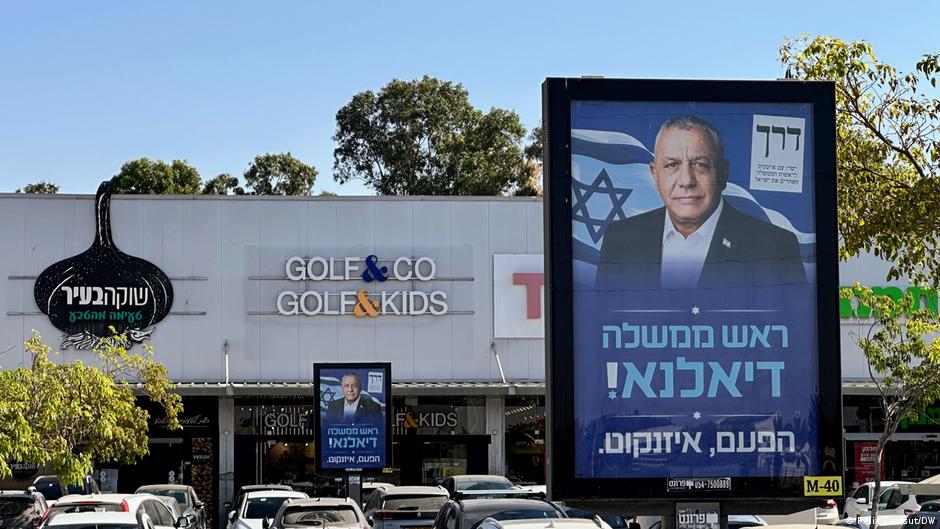
Gadi Eisenkot’s campaign in the western Negev city of Sderot has turned the spotlight on his moroccan roots as he strives to defeat long‑time prime minister Benjamin Netanyahu in the upcoming national election. Posters bearing the slogan “Rosh Memshala Dialna”, a mix of Hebrew and Moroccan Arabic meaning “prime minister of our own”, dominate train stations and busy streets, a visual cue that the liberal Yashar party hopes will resonate with the city’s sizeable Moroccan‑Jewish community. The election is set for Tuesday, and the emphasis on identity comes at a time when historic divisions between Ashkenazi and Mizrahi Jews are resurfacing across Israel’s political landscape.
Sderot, situated about 75 kilometres south of Tel Aviv and a kilometre from the Gaza border, has long been a stronghold for Netanyahu’s Likud party. In the 2022 vote, Likud captured more than 40 percent of the local ballot, well above the 23 percent it secured nationwide. The city’s demographic profile, a large population of Jews whose families arrived from Morocco and other North African nations, has turned it into a cultural symbol for Mizrahi heritage, expressed through music, cinema and community life. Yet the city’s political allegiance is not immutable; Eisenkot’s appeal to his own background is designed to tap into lingering grievances about marginalisation that many Mizrahi voters still feel.
The historical context is essential to understand the strategy. Since Israel’s founding, the ruling Mapai party, dominated by Ashkenazi leaders, pursued policies that often forced Mizrahi immigrants to abandon their language and customs in favour of a European model of citizenship. Many were settled in temporary transit camps, known as ma’abarot, which later evolved into under‑funded “development towns” like Sderot. Economic disparities and limited access to education and jobs entrenched a sense of exclusion that has persisted for decades. When Menachem Begin’s Likud rose to power in 1977, it capitalised on Mizrahi discontent, leading to the Mahapach, a political upheaval that shifted many Mizrahi voters toward the right. Despite this historic alignment, the party has never produced a Mizrahi leader, a fact Eisenkot’s campaign repeatedly highlights.
Eisenkot, himself born to a Moroccan family and raised in the southern city of Eilat, has framed his candidacy as a corrective to that omission. Yashar’s advertisements accuse Likud of sidelining Mizrahi politicians and even mock the prime minister with the line “Netanyahu: Let the Mizrahim give interviews.” The rhetoric has provoked sharp reactions. Right‑wing journalist Yinon Magal, a vocal Netanyahu supporter, dismissed Eisenkot on live television, calling him a “monkey” and alleging he is being manipulated by “elitist Ashkenazim.” Netanyahu, who traces his ancestry to Europe, publicly condemned Magal’s remark as hateful.
Award‑winning journalist and former parliamentarian Daniel Ben‑Simon, born in Morocco, offered a measured perspective on the controversy. He told Deutsche Welle that Eisenkot’s embrace of the Arabic term “dialna”, meaning “of our own”, is a rare public affirmation of a dual Israeli‑Moroccan identity. “People don’t use terms like ‘dialna’ with pride,” Ben‑Simon said, noting that Israeli society has long tried to erase the Arab linguistic heritage of North African Jews. He added that Eisenkot’s approach “creates a new identity” and could help Mizrahi Israelis feel more at home in the national narrative.
Beyond the symbolic, the city’s recent history adds urgency to the electoral contest. Since the Hamas‑led attacks of 7 October 2023, Sderot has borne the brunt of frequent rocket fire, with more than 50 residents killed in the initial onslaught. Over the subsequent three years the town’s population has risen by roughly 5,000, reaching about 40,000 as families move in, drawn by government incentives and a sense of communal resilience. The demographic shift has brought a growing national‑religious presence that tends to support Bezalel Smotrich’s far‑right Religious Zionism party, a key component of Netanyahu’s coalition. While votes for Smotrich indirectly bolster Netanyahu, the likelihood that Likud itself could lose ground in Sderot remains a focal point for analysts.
The campaign’s emphasis on mizrahi identity also raises questions about the broader Arab electorate. Though the Yashar party primarily targets Mizrahi Jews, the use of Arabic phrasing on its posters could appeal to Arab‑Israeli voters who feel alienated by the dominant right‑wing discourse. Whether that cross‑community outreach will translate into ballot support is uncertain, but it show the fluidity of political loyalties in Israel’s peripheral regions.
As the nation approaches the polls, the outcome in Sderot will be watched closely for signs of shifting allegiances. Ben‑Simon cautioned that a victory for Eisenkot could strengthen the city’s connection to its Moroccan heritage, potentially reshaping the future political identity of Mizrahi Jews across the country. “The connection cities like Sderot have to their Moroccan roots would grow stronger as a result of an Eisenkot win,” he said.
Election officials have confirmed that voting will begin on Tuesday morning, with results expected later in the evening. The final tally will determine whether Eisenkot’s cultural appeal can translate into a parliamentary seat and possibly a challenge to Netanyahu’s long‑standing grip on power. The nation now waits to see if moroccan roots will be enough to tip the balance in one of Israel’s most contested constituencies.



Comments