
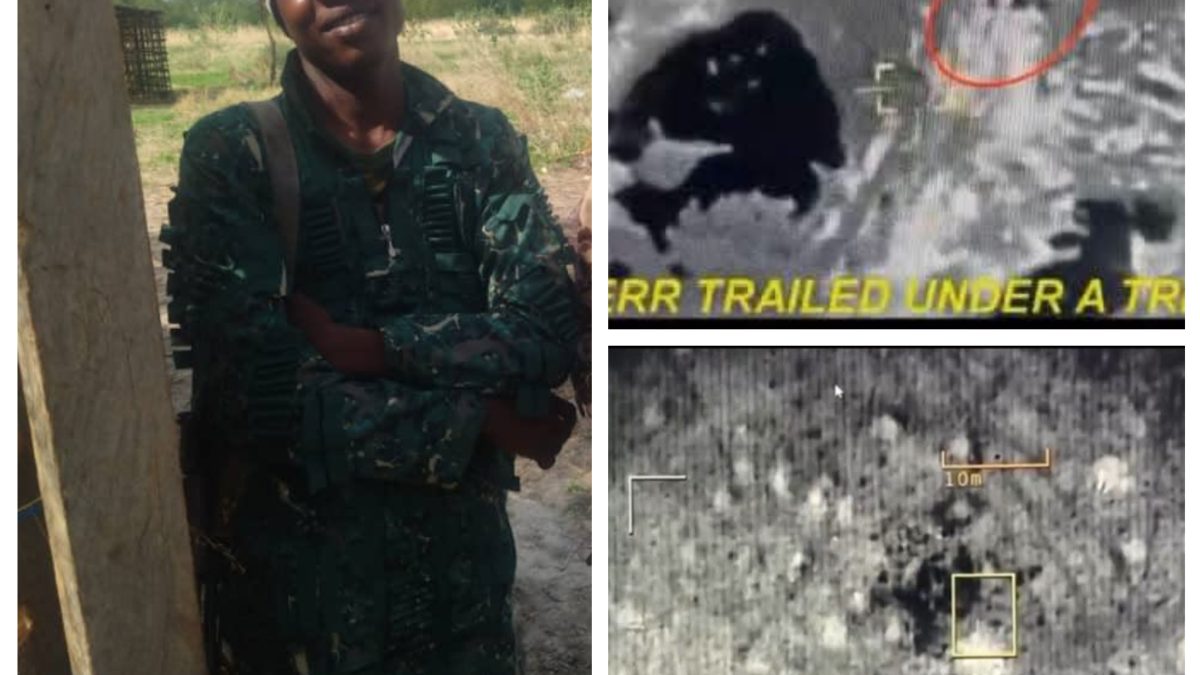
The Nigerian military said on Tuesday that a series of intelligence‑led ISWAP airstrikes carried out from 10 to 18 October 2026 neutralised 103 Islamic State West Africa Province combatants and demolished several logistics facilities in the North‑East. Acting Military Information Officer Captain Mohammed Goni, who heads the Joint Task Force (North East), released the figures in a statement issued on 29 October, noting that the operations formed part of the ongoing Operation Hadin Kai (OPHK).
The campaign brought together three distinct aerial assets: the conventional Army Aviation fleet, the Nigerian Army Remotely Piloted Aircraft Regiment (NARPARS) and the broader Air Component. Together they executed seven precision strikes across Borno and Adamawa states, each aimed at known terrorist concentrations, hideouts and supply caches that had been mapped through a combination of signals intelligence, drone surveillance and human sources on the ground.
The first strike hit the Gudumbali area of Guzamala Local Government Area (LGA) on 10 October. Satellite images later showed a plume of smoke and the wreckage of a small storage structure, confirming the impact of the airburst. The following day, aircraft turned their attention to Badu in Monguno LGA, delivering a second precision munition that reportedly destroyed a makeshift command post used by ISWAP fighters.
A third and fourth round of attacks took place on 13 October, targeting the Mairari zone of Guzamala LGA and an adjacent site east of Badu. According to the statement, a Guardian‑type unmanned aerial system observed a gathering of more than 100 militants, accompanied by a convoy of motorcycles, roughly 23 kilometres east of Badu and 19 kilometres west of Monguno. A follow‑up strike was launched, and military sources assessed that about 30 fighters were neutralised, although they could not verify the exact damage to the motorcycles.
The fifth strike was delivered on 16 October against Duste Uku in Gombi LGA of Adamawa State. This location had been identified as a logistics hub where boat engines and other river‑transport equipment were stored. The air attack reportedly destroyed a number of those engines, striking at the group’s reliance on Lake Chad’s waterways for moving personnel and supplies.
The final and most significant operation occurred on 18 October, when the Air Component targeted the alternate residence of Abu Saleem, the ISWAP Wali of South Lake Chad, in the Arina Woje area of Monguno LGA, Borno State. Human intelligence later confirmed the elimination of Jindullah, described as Abu Saleem’s chief security guard, and Abul Kissa, a member of the group’s Shura Council. The strike also razed a structure used to conceal fighters in the surrounding forest, and destroyed nine boat engines and several motorcycles that had been hidden on the site.
Captain Goni stressed that the blend of manned aircraft, drones and ground‑level intelligence enabled the Joint Task Force to maintain sustained pressure on ISWAP’s leadership and supply networks. “The successes were recorded through the coordinated employment of Nigerian Army Aviation, the Nigerian Army Remotely Piloted Aircraft (NARPARS) Regiment and Air Component assets, reinforcing the military’s resolve to dismantle terrorist networks and deny them freedom of action,” the statement read.
The timing of the air campaign coincides with a period of heightened insecurity in the North‑East, where the insurgency has long disrupted farming cycles, market activity and the free movement of people. ISWAP’s operational model relies heavily on riverine routes across the Lake Chad basin and on motorised columns that can quickly relocate across porous borders. By destroying nine boat engines and a stock of motorcycles, the strikes are expected to curtail the group’s mobility, forcing militants onto slower, more exposed overland routes that are easier for security forces to monitor.
Local officials have warned that the loss of these transport assets could strain the group’s ability to launch raids on villages and to resupply its bases in the forested zones that straddle Borno and Adamawa. The destruction of storage facilities also hits the logistical backbone that supports recruitment, training and the procurement of weapons.
Security analysts, however, caution that insurgent groups such as ISWAP have demonstrated a capacity to replenish manpower and material through cross‑border recruitment and external funding streams. While the removal of senior figures like Jindullah and Abul Kissa may create temporary leadership vacuums, the organization’s hierarchical structure often allows other commanders to step into the void quickly. Nonetheless, the targeting of a Shura Council member signals an attempt to disrupt the group’s strategic planning and decision‑making processes.
Observers note that the ability to conduct seven coordinated strikes over eight days reflects a marked improvement in real‑time intelligence collection and rapid response. Earlier phases of Operation Hadin Kai were hampered by limited aerial reconnaissance and delayed information flow. The current integration of drones, signal intercepts and human‑derived tips appears to have shortened the decision‑making cycle, enabling the military to act on fresh intelligence before insurgents can disperse.
The statement made no mention of civilian casualties, and local authorities have not reported any injuries among non‑combatants in the affected areas. This absence of reported collateral damage is presented by the military as evidence of the precision of the air operations, a point that is likely to be scrutinised by humanitarian groups monitoring the conflict.
Looking ahead, the Joint Task Force indicated that Operation Hadin Kai will maintain its “operational momentum, denying terrorists safe havens and advancing efforts to restore lasting peace and security across the North East.” The next phase is expected to deepen the integration of aerial surveillance with ground patrols, aiming to intercept remaining ISWAP cells before they can regroup. Military planners have signalled that further precision strikes may be launched if intelligence continues to reveal concentrations of fighters or critical logistics nodes.
Updates are expected as the task force evaluates the longer‑term impact of the recent ISWAP airstrikes on the insurgent network’s operational capabilities and as it calibrates subsequent actions to sustain pressure on the militant group.



Comments