
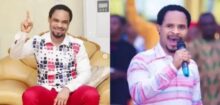
In a video that quickly went viral on social media, the controversial Nigerian cleric Chukwuemeka Ohanaemere, better known as Odumeja, stated plainly that “nobody pays me tithes” and that his ministry does not collect money from its members. The clip, posted earlier this week, has already amassed millions of views and reignited a long‑standing debate over the role of tithing in Nigerian churches. By rejecting the routine solicitation of regular contributions, the prophet positioned his church as a counter‑example to congregations he says prioritize cash flow over visible miracles.
Odumeja’s remarks were blunt and repetitive: “I don’t preach about tithes. Nobody pays me tithes.” He repeated the phrase several times, underscoring his refusal to incorporate mandatory giving into his sermons. According to the preacher, his mission on earth is “demonstration of power,” and he insists that any financial offering should arise from personal conviction rather than pressure from clergy. He added that tithing is “real” but must remain a voluntary act between an individual and God, not a tool for “brainwashing” or coercion. By drawing a clear line between his own practices and those of other pastors, Odumeja sought to differentiate his ministry from what he described as “churches that place too much emphasis on collecting money.”
The cleric also took aim at the doctrine that links salvation to financial contributions. “Give it to you that if you don’t do it, you will not go to heaven. That is not from God,” he said, rejecting the notion that heaven can be bought or lost through monetary means. This criticism reflects a broader debate within Nigeria’s vibrant Pentecostal scene, where many leaders teach that a tithe of one’s income is a biblical requirement for spiritual growth and divine favour. Odumeja’s stance challenges that narrative, suggesting that such teachings may foster fear rather than faith. By positioning tithing as a personal decision, he invites believers to examine their motives and to seek evidence of God’s power beyond financial transactions.
In Nigeria, the practice of tithing has long been intertwined with church funding. Most megachurches rely on regular contributions to sustain large staff, maintain expansive facilities, and support media ministries that reach nationwide audiences. Over the past decade, high‑profile pastors have faced public scrutiny when lavish lifestyles appeared to be funded by congregational giving. The resulting calls for greater transparency have made many worshippers wary of constant appeals for money. Odumeja’s declaration taps into that sentiment, offering an alternative model where the focus is on “practical power” rather than monetary intake.
While Odumeja does not claim that tithing is sinful, his emphasis on personal choice aligns with a growing sentiment among some worshippers who feel burdened by constant appeals for cash. In recent years, several high‑profile pastors have faced scrutiny over lavish lifestyles funded by congregational contributions, prompting calls for greater transparency and accountability. Odumeja’s declaration adds a new dimension to that conversation, as he promises to “teach and show you the practical power of God” without demanding a regular offering. Observers note that his approach could attract followers disillusioned with churches that appear more interested in profit than in delivering tangible spiritual experiences.
The video continues to circulate, with many Nigerians sharing the clip and debating its implications. Some commenters praised Odumeja for “speaking truth” and freeing believers from “financial bondage,” while others questioned whether his claims could be sustained without the financial support that traditionally underwrites church operations. No official response has yet emerged from other religious bodies, but the discussion highlights the ongoing tension between faith, finance and accountability in Nigeria’s religious landscape.
Analysts point out that even ministries that do not enforce tithing still incur operating costs, salaries, rent, utilities and outreach programmes all require funding. Odumeja’s stance, therefore, raises practical questions about how his church will meet those needs. He has suggested that voluntary giving will continue to happen, but only when believers feel personally compelled, not when they are pressured by sermons. This approach mirrors a broader shift among some pastors who are experimenting with “free‑will” offerings, hoping to rebuild trust by removing the perception of coercion.
In the meantime, the viral video has become a reference point for debates on social media platforms. Threads on Twitter and Facebook feature users quoting Odumeja’s line “Nobody pays me tithes” as a rallying cry against what they see as profit‑driven religion. Others argue that without a steady stream of contributions, churches may struggle to maintain the infrastructure that supports community services, such as schools, hospitals and charitable projects that many congregations run. The conversation therefore touches not only on theological matters but also on the social role churches play in Nigerian society.
Odumeja has indicated that his ministry will maintain its focus on “practical power” and leave the decision to tithe entirely to each individual’s conscience. He reiterated that “tithe is real. But it is something that you must decide. Not something that somebody will be brainwashing you, forcing you.” By framing giving as a personal relationship with God, he hopes to shift the narrative from one of obligation to one of genuine devotion.
As the discussion evolves, the next phase will likely see how his stance influences both his followers and the broader dialogue on church financing across the country. Whether other pastors will adopt a similar approach or double down on traditional tithe teaching remains to be seen, but Odumeja’s viral declaration has undeniably added fresh momentum to a conversation that sits at the heart of Nigeria’s Pentecostal movement.


Comments