
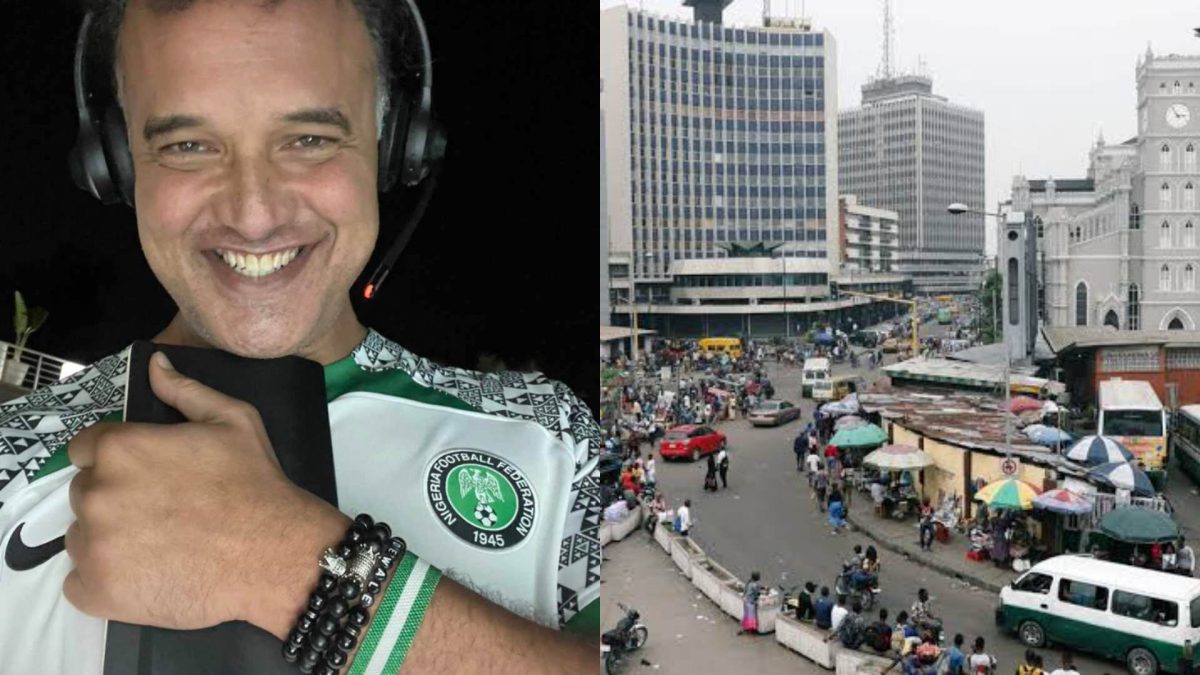
Social media users across the country turned their attention to micro‑blogging platform X after Ray Youssef sparks online buzz with an announcement of his upcoming visit to Nigeria. The Caucasian businessman posted a photo taken aboard his flight, his face lit with excitement as he prepared to land in the West African nation. In the image he sports a white Nigeria national football team jersey, a detail that immediately caught the eye of thousands of local followers. He clutches a diary tightly, smiles directly at the camera and adds a “💯” symbol at the end of his short caption, signalling full confidence and enthusiasm.
Mixed reactions from local commentators
The post generated a rapid surge of comments from Nigerian netizens, whose replies blended hospitality, humour and a dose of street‑level scepticism. Within minutes the comment section was filled with suggestions for food, meeting spots and candid observations about daily life.
One user, identified as @investor_mj, asked whether Youssef had tried the country’s famous jollof rice. “I’m hoping you will taste naija jollof rice,” the comment read. Youssef replied quickly, noting that he had already sampled local dishes. “Been on it bro and the egusi soup! Massive protein load,” he wrote, pointing to the hearty melon‑seed soup that is a staple in many Nigerian homes.
Other participants kept the tone light. The account @Fishfml invited the visitor to meet up, writing, “Oya nah show, make we jam for corner.” The slang‑laden invitation reflects the informal, friendly style that often characterises online exchanges among young Nigerians.
Not all responses were welcoming. A user calling themselves @Szacksnola offered a starkly different perspective, urging Youssef to move beyond the comfort of his foreign status. The comment warned, “Abeg gerrara here. You dey oyinbo land dey tweet say u be nigeria boy. If u wan relevant, com obalende or ijora badia. Rent one room apartment dia make we all deey jump danfo go work every morning.” The criticism highlights a recurring tension between outsiders who appear to embrace local symbols and residents who feel daily hardships are being overlooked.
The cultural appeal of the national jersey
Travel updates from foreign visitors heading to Nigeria often attract attention, especially when they incorporate recognizable local symbols such as the Super Eagles jersey. The national football kit has, over the years, become more than a sports uniform; it is a cultural badge that signals respect for Nigeria’s football passion. International musicians, athletes and even tourists have been spotted wearing the jersey, turning it into a fashion statement that crosses borders.
When Youssef posted his picture in the white jersey, many Nigerians interpreted it as an informal salute to their national pride. For local audiences, seeing an overseas traveller adopt the team’s colours sparks conversation about cultural affinity and raises questions about the depth of that connection. The jersey therefore serves as a visual shortcut, prompting both positive remarks about shared enthusiasm and skeptical commentary about authenticity.
Food references further fuel online dialogue. Jollof rice, a one‑pot tomato‑based dish, is a source of regional pride, with rivalries spilling over from Ghana to Nigeria in the digital arena. Likewise, egusi soup, made from ground melon seeds, leafy vegetables and assorted proteins, is a staple that appears on tables from Lagos markets to roadside eateries. By mentioning both dishes, Youssef positioned himself as someone who has already tasted familiar flavours, a point that pleased some commentators while prompting others to ask for more evidence of genuine immersion.
Lagos: contrast between wealth and everyday reality
Lagos, Nigeria’s commercial hub, is a city of stark contrasts. The island districts, Victoria, Ikoyi and Lekki, host luxury hotels, high‑end restaurants and well‑maintained roads. Visitors who stay in these areas often experience a polished version of the city, complete with security personnel, upscale shopping malls and reliable private transport.
Beyond the islands, the mainland stretches into densely populated neighbourhoods where traffic congestion, informal transport and high living costs dominate daily life. Residents rely on “danfo” minibuses that crowd the streets, navigating a chaotic network that can add hours to a simple commute. Informal settlements, bustling markets and street‑side food stalls paint a different picture of Lagos, one that many locals feel is under‑represented in mainstream narratives.
The sharp comment from @Szacksnola show this divide. By urging Youssef to rent a single‑room apartment in areas such as Obalende or Ijora Badia and to board danfo buses each morning, the user is calling attention to the lived experience of ordinary Lagosians. The request is not merely about accommodation; it is a plea for the visitor to witness the rhythm of the city as it is felt by the majority of its inhabitants.
What lies ahead for the visitor
Ray Youssef has not disclosed further details about his itinerary, the purpose of his trip or which Nigerian cities he intends to visit after landing. The lack of a public schedule leaves room for speculation, but the online reaction already provides a snapshot of how his presence is being received. Some will likely welcome him at hotels and upscale venues, while others may hope to meet him in more modest settings.
As the plane descends and the social media conversation continues, the next steps will hinge on how Youssef chooses to engage with the suggestions and criticisms he has received. Whether he follows the invitation to “jam for corner” or takes the more demanding challenge of living among the danfo‑riding commuters, the unfolding story will add another chapter to the ongoing dialogue about foreign visitors, cultural symbols and everyday life in Nigeria.



Comments