
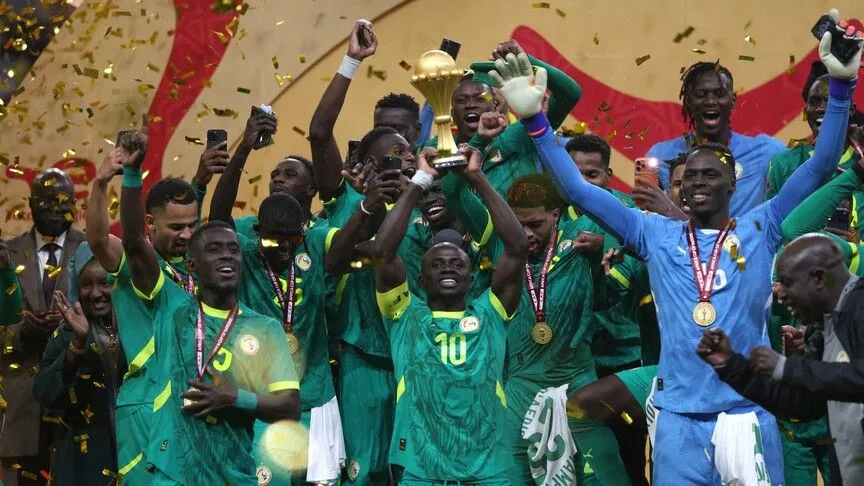
The Court of Arbitration for Sport (CAS) announced that it expects to hand down its decision on the Senegal appeal by the end of November, bringing a contentious episode that began with the 2025 Africa Cup of Nations final in Rabat to a close. The hearing on the matter took place behind closed doors on 8 October, when a panel of arbitrators began deliberating on the case filed by the Senegalese Football Federation against the Confederation of African Football (CAF) and the Royal Moroccan Football Federation.
The dispute traces its origin to the dramatic final on 18 January, when Senegal edged out hosts Morocco 1‑0 after extra time. The match had been tied 0‑0 deep into stoppage time when a Video Assistant Referee review awarded Morocco a penalty. In protest, Senegal’s players left the pitch, prompting a lengthy interruption. Play resumed after officials ordered the teams back, and Morocco’s Brahim Diaz saw his Panenka‑style spot‑kick saved by Senegal’s goalkeeper Edouard Mendy. The deadlock was finally broken when Pape Gueye struck in extra time, securing the win for Senegal.
The celebrations were short‑lived. On 17 March, CAF’s Appeal Board overturned the result after a Moroccan appeal argued that Senegal had forfeited the match by abandoning the field without permission. Citing Articles 82 and 84 of the competition’s regulations, the board awarded Morocco a 3‑0 victory and declared the North African nation the 2025 African champions. The decision sparked immediate backlash from the Senegalese side, who lodged an appeal with CAS on 25 March, seeking to have the ruling rescinded and to be reinstated as champions.
In its statement, the Lausanne‑based court confirmed that the panel has “begun and continue[d] their deliberations,” signalling that the case is moving through the standard procedural stages. The CAS panel will review the factual record, the application of CAF’s disciplinary statutes, and the legitimacy of the penalty that triggered the protest. While the court’s written decision is expected by the end of November, the exact date of its release has not been disclosed.
The ruling carries significant implications for both federations. For Senegal, a reversal would restore the title it claimed on the field and preserve the morale of a squad that had just secured its first AFCON trophy. For Morocco, the award of the championship has already been celebrated domestically, with the royal federation highlighting the decision as a vindication of their appeal. A CAS decision favouring CAF’s board could cement Morocco’s status as champions, while a contrary judgment may provoke calls for further legal recourse.
Football fans across the continent have followed the saga closely, with social media echoing the frustration of those who felt the penalty decision and subsequent protest were mishandled. Analysts note that the case also raises broader questions about the governance of African football, the transparency of CAF’s disciplinary processes, and the role of video technology in high‑stakes matches. The incident show the pressure on referees and officials to manage disputes swiftly, especially when a penalty decision can alter the course of a final.
The Senegalese Football Federation has maintained that its players left the field only after the penalty was awarded, arguing that the decision itself was erroneous and that the subsequent interruption was a direct result of the controversial call. In its appeal, Senegal cited procedural breaches and demanded that the original 1‑0 result stand. The federation has also called for reforms to ensure that future matches are not decided by disputed officiating moments that can lead to such escalations.
As the November deadline approaches, both sides are preparing for the outcome. CAF has indicated that it will respect the CAS ruling, whatever the verdict, and will implement any necessary adjustments to the record books. The Royal Moroccan Football Federation, meanwhile, has urged patience, noting that the decision will bring finality to a matter that has divided supporters for months. Observers expect that the CAS judgment will be published on the court’s website and communicated to the involved parties shortly thereafter.
The next step will be the formal announcement of the panel’s decision, which will either confirm Morocco’s 3‑0 awarded win or restore Senegal’s on‑field victory. Whatever the conclusion, the ruling will close a chapter that has highlighted the complexities of football governance in Africa and the importance of clear, enforceable rules in tournament play.


Comments